How to read this profile
Victoria Wellness is included in this edition for readers comparing private addiction and mental health care. Its program model is described as Victoria Wellness is a private residential mental-health and wellbeing program on Rice Lake in Gores Landing, Ontario. Its current site describes a small residential cohort, with eight private bedroom suites and two semi-private rooms, each with an ensuite bathroom. The location and clinical scope should be considered together: a provider can have assessment, residential and continuation services with different arrangements. The practical question is whether the specific program proposed for the person matches their assessed needs, preferences and available support.
The public-information review located material across 3 provider pages. The most fully documented areas in this sample were therapies, condition clarity, continuity of care, privacy and setting, practical information, accountability. Topics to clarify directly include clinical team, assessment, medical pathways, cost transparency. The score records documentation coverage and does not establish treatment effectiveness, safety or a guaranteed outcome. A topic that was not located may be explained by the provider in material outside this sample.
Before making an admission decision
Request the name of the receiving service, the proposed residence or hospital, and the professionals responsible for assessment and treatment. Ask for an illustrative weekly schedule that distinguishes individual clinical work from group sessions, complementary activities and practical support. Discuss the care available outside scheduled sessions and the arrangements for medical assessment or escalation. Where another hospital or independent clinician is involved, confirm that relationship and its cost rather than assuming it forms part of the residential package.
A financial comparison should use the same time period and accommodation model. The fee panel presents available public information as context; a current written proposal should identify the initial duration, the agreed team, inclusions, exclusions and payment terms. Confirm whether a private residence is reserved for one client or whether only the bedroom is private. Ask separately about companions, external appointments, transport and any extension of the stay. These details affect the practical experience and the full commitment.
Discuss the plan for returning home at the beginning of the conversation. Identify the clinician or coordinator responsible for the transition, the follow-up included in the fee and any services that require a separate arrangement. With consent, involve the professionals who already know the person. Remote or international follow-up depends on professional permissions and availability in the country where care is received. A directory profile is a starting point for that coordinated conversation, and provider details should be confirmed before travel or payment.
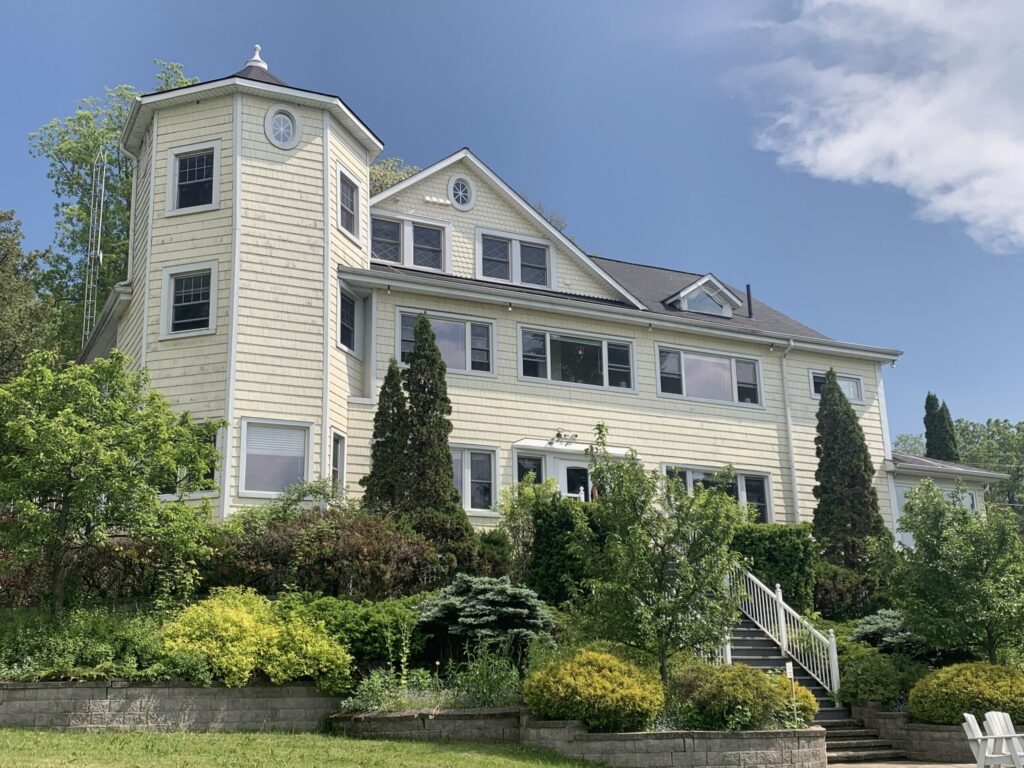
Victoria Wellness is a private residential mental-health and wellbeing program on Rice Lake in Gores Landing, Ontario. Its current site describes a small residential cohort, with eight private bedroom suites and two semi-private rooms, each with an ensuite bathroom.
The program addresses stress, burnout, anxiety, depression, trauma and other mild-to-moderate mental-health concerns, including mild substance-use concerns that do not require detox. Published stays are 28, 35 and 42 days, with possible weekly extensions. Victoria Wellness is not a medical detox facility, asks clients to arrive sober, manages pre-prescribed medication but does not prescribe or change dosages in house, and combines psychotherapy, CBT, DBT, ecotherapy and complementary sessions.
A residential program built around skills and participation
Victoria Wellness’s program overview describes a mixture of psychotherapy, CBT and DBT skills, nature-based activities and complementary practices. Its menu includes creative work, movement, mindfulness, massage and Reiki. The homepage describes groups of up to ten people. These activities have different purposes and should not be treated as interchangeable clinical treatments. Ask which elements are central to the personal care plan, which are optional and how a concern or preference can be discussed with the team.
The residential format creates time for structured learning and practice away from ordinary demands. A prospective resident should still identify concrete goals, such as managing a particular pattern of stress or returning to everyday responsibilities with a workable plan. The homepage also describes Touchstone, an 18-week alumni program arranged in three six-week sections, revisiting CBT, DBT and ecotherapy skills. It says registration is required and participation is free for past alumni. Confirm the current dates, delivery arrangements and how this group-based follow-up connects with any individual therapy needed after returning home. The homepage describes weekly skills reviews; ask whether participation requires attending the full sequence and how to register.
Match the presenting concern to the program’s limits
The conditions page describes work mainly with mild-to-moderate concerns and people able to participate in skills-based care. It distinguishes trauma recovery from acute PTSD treatment. It also gives conditional examples: stable bipolar disorder without a current manic or depressive episode, ADHD without severe impairment, and eating concerns that do not need specialized medical intervention. Those qualifications matter more than a broad condition label on a directory listing.
A formal diagnosis is not required to ask about admission. The provider describes an intake process that explores whether its program fits the person’s needs and may direct someone toward other care. Describe current symptoms, functional difficulties and the support already in place, rather than relying only on a past diagnosis. A person whose needs exceed a residential skills program should ask what assessment or additional service is appropriate first. The aim is to establish a suitable starting point, with clear responsibilities for any ongoing specialist care, rather than assume that every mental health concern belongs in the same residential setting.
Separate scheduled therapy from medical support
The therapy program publishes a structured daily schedule and, in addition, 1.5 hours with a primary psychotherapist and two mental health or addiction counseling sessions each week. It also lists complementary appointments. Confirm the timetable for the proposed stay, including the balance of individual clinical work, group learning and optional activities; a broad count of personal sessions can include different kinds of support.
The medical description distinguishes help with existing prescriptions from prescribing. A registered practical nurse oversees medication handling, but the center says it does not prescribe or change dosages in house. The program separately lists one nurse practitioner appointment for health and medication review, potentially including changes, with further appointments arranged independently. Ask where that appointment occurs, who takes prescribing responsibility and how information reaches the usual clinician. The provider asks residents to bring their prescribed medication and supplements and says it can help arrange family-doctor contact or hospital access when needed. It expressly identifies itself as a setting without medical detox.
Understand the room and the shared environment
The accommodation page describes eight private bedroom suites and two semi-private rooms, with ensuite bathrooms and coded entry locks. It also describes communal therapy and recreation spaces. Confirm the room category in the written offer, who may share a semi-private room and whether a particular accessibility or bathroom requirement can be met. A general photograph or the word “private” elsewhere on the website should not replace that room-specific discussion.
The Rice Lake setting offers indoor recreation, a small gym, outdoor walking and seasonal activities. Kayaking, swimming, snowshoeing and other examples depend on conditions and suitability; they are not a guarantee of a particular activity during every stay. Ask about supervision and alternatives if an activity is uncomfortable or physically unsuitable. The residential experience also involves spending time with a peer group, even when a bedroom is private. Someone who needs substantial quiet, predictable routines or a particular dietary arrangement should discuss those needs before arrival and learn how the team balances individual preferences with the shared daily program.
Funding, visiting and responsibilities outside treatment
The FAQ says the stay is privately funded and not covered by OHIP. Itemized invoices may support partial reimbursement for registered-therapist services through extended insurance. That possibility is different from coverage of the residential package. Obtain a written quote and ask the insurer to confirm eligible services, practitioner requirements and limits. The provider’s suggestion about a possible tax treatment also needs individual professional advice.
The same FAQ gives a maximum of ten to eleven guests, so confirm current occupancy and room assignment. It describes Sunday visits from 1–5 p.m., personal devices subject to rules, and private calls outside programming. Planned therapeutic leave can be requested after two full weeks and requires an agreed written plan. The team says it can help accommodate important outside appointments and some work commitments; that is not unrestricted time away from the schedule. Explain such obligations before booking, including any need for equipment or a private workspace, and obtain agreement on what can realistically continue during the stay. Medication refills can be coordinated through the provider’s pharmacy arrangement.
Know which team member is responsible for each part of care
The team page describes distinct clinical, nursing, counseling, holistic, support and operational roles. It names Catherine Calabretta as a registered psychotherapist, Ksenia Usenko as a registered practical nurse and nurse coordinator, and Rahim Thawer as a strategic consultant for clinical operations. Other biographies describe primary counseling, group facilitation, peer support and complementary activities. These are provider-published role descriptions; they do not establish that every named person will deliver a particular resident’s sessions. The nursing biography also identifies responsibility for the medical room and residents’ medical records.
Request the name and role of the primary therapist, the person coordinating the care plan and the contact for concerns between appointments. Ask how the team shares relevant information and how a change of therapist or staff absence is managed. The page also describes external wellness partnerships, which should be distinguished from staff routinely present in the residence. Clarify which appointments are included, which involve a partner service and how consent or additional charges are handled. A well-defined set of responsibilities is more useful than a long list of credentials when deciding who will assess needs, provide treatment and coordinate follow-up.
Check the practitioner’s professional registration
The College of Registered Psychotherapists of Ontario explains that its public register can confirm whether a person is registered and show registration status, employment information and any discipline history. This offers a practical way to check the individual who will provide psychotherapy. It is not a rating of a residential center, and a title on a provider’s biography should not be substituted for the applicable professional record.
Ask for the practitioner’s full name, professional designation and regulator, then check the corresponding record. The CRPO register is relevant to its registrants; a nurse or social worker may belong to a different professional college. If a search is unclear, ask the practitioner or regulator for help rather than infer that the person is unregistered. The register permits searches by name and location, but adding unnecessary filters can hide a matching professional record. CRPO’s guidance also emphasizes working within competence and explaining service options, limitations, risks and benefits. Use the initial discussion to understand experience with the presenting concern and the proposed approach. Registration is one part of that assessment, alongside a clear explanation of the person’s actual role, scope and availability.
Discuss records and confidentiality before sharing information
Victoria Wellness’s privacy policy, effective January 17, 2025, describes collecting contact information and health information such as treatment history, care plans and progress notes. It says health information may be shared with other professionals involved in treatment with consent, while other disclosures can apply in specified circumstances. A residential stay may involve several staff or partner services, so it is useful to understand how those information flows work in practice.
Ask who maintains the clinical record, how to provide existing reports securely and what permission is needed to involve a family member or usual clinician. The published policy describes requests for access and correction and a deletion request subject to exceptions; it does not promise that every record can simply be erased on departure. Obtain the current procedure and contact for a records or privacy concern. The policy provides a dedicated privacy contact for questions about information handling and records. If an insurer requires an invoice or supporting information, clarify what will be supplied before authorizing it. Keep a copy of the agreed communication and consent arrangements, particularly when different practitioners or organizations are involved in continuing care.
Provider and regulator sources reviewed October 19, 2026. Individual suitability, current staffing, room arrangements, fees and coverage require confirmation.
Explore Canadian treatment options and the depression treatment guide.
The center is at 5316 Rice Lake Scenic Drive, Gores Landing, ON K0K 2E0 and lists 905-342-5621 and 1-833-569-2155. Follow-up appointments, ongoing weekly peer support and an 18-week alumni aftercare program are published. The stay is privately funded and not OHIP-covered; some registered-therapist services may qualify for partial extended-insurance reimbursement, and itemized invoices are available. Program fees, benefits and tax treatment require confirmation. Sources: provider overview, therapy, duration and aftercare, current scope and medical limits, accommodation, funding and insurance FAQ and contact details, checked 2026-10-13.
Questions for your first conversation
Which clinical question would the initial assessment answer? Who would lead the plan and how would progress be reviewed? Which services take place at the residence and which involve an external provider? What are the limits of the proposed program, and when would another level of care be recommended? Ask the provider to connect its answers to the person’s history and the actual receiving team. Keep a dated record of the response with the written proposal so that later changes can be discussed clearly.
Source evidence breakdown
The documentation index records which information was located in sampled provider pages. Each of the twenty signals earns five points when located. A missing signal means it was not found in that sample. It does not establish that a service is absent. This is a documentation index, and it cannot establish clinical quality, licensing status, or outcomes.
Not located: Published clinical roles
Not located: Professional qualifications described
Not located: Assessment process described
Located: Individual planning described · Provider source
Located: Named psychological therapies · Provider source
Located: Individual therapy described · Provider source
Located: Medical care described · Provider source
Not located: Admission or treatment boundaries described
Located: Mental health scope described · Provider source
Located: Addiction or co-occurring scope described · Provider source
Located: Aftercare described · Provider source
Located: Family or transition support described · Provider source
Located: Private accommodation described · Provider source
Located: Confidentiality described · Provider source
Located: Location or admissions contact available · Provider source
Located: Programme duration described · Provider source
Not located: Numerical treatment fee published
Not located: Inclusions or payment terms described
Located: Team information published · Provider source
Located: Registration or accreditation information published · Provider source
Continue your comparison
Canada rankings Addiction rankings Anxiety rankings Burnout rankings Depression rankings Drug Addiction rankings Mental Health rankings Trauma & PTSD rankings