How to read this profile
Sana at Stowe is included in this edition for readers comparing private addiction and mental health care. Its program model is described as Sana at Stowe is an adult substance-use treatment facility at 3430 Mountain Road in Stowe, Vermont. Its official site says it treats substance use disorders and co-occurring mental health conditions. The location and clinical scope should be considered together: a provider can have assessment, residential and continuation services with different arrangements. The practical question is whether the specific program proposed for the person matches their assessed needs, preferences and available support.
The public-information review located material across 4 provider pages. The most fully documented areas in this sample were clinical team, assessment, medical pathways, condition clarity, continuity of care, practical information, cost transparency, accountability. Topics to clarify directly include therapies, privacy and setting. The score records documentation coverage and does not establish treatment effectiveness, safety or a guaranteed outcome. A topic that was not located may be explained by the provider in material outside this sample.
Before making an admission decision
Request the name of the receiving service, the proposed residence or hospital, and the professionals responsible for assessment and treatment. Ask for an illustrative weekly schedule that distinguishes individual clinical work from group sessions, complementary activities and practical support. Discuss the care available outside scheduled sessions and the arrangements for medical assessment or escalation. Where another hospital or independent clinician is involved, confirm that relationship and its cost rather than assuming it forms part of the residential package.
A financial comparison should use the same time period and accommodation model. The fee panel presents available public information as context; a current written proposal should identify the initial duration, the agreed team, inclusions, exclusions and payment terms. Confirm whether a private residence is reserved for one client or whether only the bedroom is private. Ask separately about companions, external appointments, transport and any extension of the stay. These details affect the practical experience and the full commitment.
Discuss the plan for returning home at the beginning of the conversation. Identify the clinician or coordinator responsible for the transition, the follow-up included in the fee and any services that require a separate arrangement. With consent, involve the professionals who already know the person. Remote or international follow-up depends on professional permissions and availability in the country where care is received. A directory profile is a starting point for that coordinated conversation, and provider details should be confirmed before travel or payment.
Sana at Stowe is an adult substance-use treatment facility at 3430 Mountain Road in Stowe, Vermont. Its official site says it treats substance use disorders and co-occurring mental health conditions.
Sana provides two levels of care: medically supervised withdrawal management and residential treatment, both with 24-hour medical and clinical support. The provider also lists medication-assisted treatment and a range of behavioral and trauma-informed therapies.
Sana publishes (866) 575-9958 for admissions and serves adults aged 18 and over. Its dedicated residential page describes a 35-day program including withdrawal management when needed; the admissions page also carries shorter planning figures, so the proposed duration should be confirmed. Sana is in network with BlueCross BlueShield, United Healthcare, UBH, UMR, MVP, First Health, Tufts Health Plan and Harvard Pilgrim Health Care; it works out of network with other commercial plans but does not accept Medicare or Medicaid.
Who the Stowe program is designed to admit
Sana’s admissions criteria require an adult to have a substance-use disorder, meet the facility’s medical and psychological criteria, and agree to its policies. Its treatment of depression, anxiety or trauma therefore belongs within that admission framework. A person seeking care solely for a mental-health condition should ask whether Sana can accept that presentation before arranging travel.
The admissions page also contains a duration inconsistency worth resolving early. It recommends 28 days in one section and says most people stay at least 30, while the dedicated residential description specifies 35 days. These are provider-published planning figures, not interchangeable package lengths. Ask the team to identify the proposed admission and discharge dates, whether withdrawal management occupies part of that period, and what clinical review could extend it. The telephone assessment allows the team to review the history before deciding whether Sana or another service is appropriate.
Residential treatment and withdrawal management under one roof
The residential program page presents a 35-day experience in which detox, when necessary, is included within the stay. It does not describe 35 residential days automatically added after a separate detox admission. Some clients may need an extension, and the published duration does not determine an individual discharge decision.
Sana describes round-the-clock medical and clinical support across its withdrawal-management and residential levels. Its residential work combines individual sessions, group work and family or couples involvement with activities such as yoga, gardening, tennis and seasonal outdoor pursuits. The practical question is how the schedule changes as a person becomes ready for more participation. Someone arriving for withdrawal support may initially have a different day from a resident preparing to return home. An admission proposal should explain that progression and identify the clinical contact who reviews it, particularly if an employer or family is planning around a fixed return date.
How the withdrawal-management stage is assessed
Sana’s withdrawal-management service sits within the same Stowe facility as residential care. The provider describes medical supervision and individualized support during this stage, with subsequent treatment addressing substance use beyond the initial withdrawal period. The availability of both services can reduce a change of setting for people accepted into that pathway.
Admission still depends on the person’s actual medical needs. When discussing a place, give the team an accurate account of current substances, prescribed medicines, previous withdrawal experiences and relevant health conditions. Ask which clinician will review that history and what would require treatment in another setting. These questions establish the proposed level of support; they do not require a prospective resident to decide which detox method is appropriate. The written plan should also distinguish the end of withdrawal monitoring from the end of the wider residential admission, since Sana’s published program combines the two when needed.
The behavioral therapies behind the daily work
In its treatment-method description, Sana names cognitive behavioral therapy, dialectical behavior therapy, acceptance and commitment therapy, motivational enhancement and twelve-step facilitation. These are presented as parts of an individualized approach rather than a promise that each resident receives an identical sequence of every method.
For a prospective client, the useful detail is how those approaches connect to the problems being worked on. A plan might identify a behavior to change, a skill to practice between sessions and a way to review progress with the assigned therapist. Ask the team to explain the intended balance between individual work, therapist-led groups and other recovery activities. Sana also describes attention to the person’s values and cultural background. That gives a starting point for discussing language, beliefs, previous treatment experiences and approaches the person has found difficult. Those preferences can be considered alongside the clinical assessment without assuming that any named therapy guarantees a particular outcome.
Trauma work within substance-use treatment
Sana’s trauma and PTSD service addresses these concerns in the context of residential addiction treatment. The page describes an approach that may bring together behavioral therapies, process groups, expressive activities, medication support and wellness work. It should be read alongside the substance-use admission criteria, especially when trauma is the main reason someone is comparing centers.
A useful pre-admission conversation separates recognition of a trauma history from a commitment to a particular trauma intervention. Ask how the team assesses readiness, whether an existing therapist can contribute information with permission, and how the pace of treatment will be reviewed. People who prefer to discuss sensitive experiences individually can ask how that preference fits with group participation. A clear explanation of the proposed work and its boundaries is more informative than a general trauma label, particularly if previous treatment felt overwhelming or moved faster than the person could manage.
Medication decisions and ongoing review
The provider’s medication-assisted treatment information describes medication as one possible part of care alongside counseling and behavioral work. It does not make medication a substitute for the rest of the program or establish that a particular prescription is suitable for everyone admitted.
Before arrival, ask Sana to review the current medication list, including prescriptions from clinicians who will continue care after discharge. The practical issues include who makes medication decisions during the stay, how changes are explained, and how the discharge supply and follow-up appointments will be arranged. This is especially relevant when a resident normally receives treatment in another state. A prospective client can also ask how a decision to continue, change or decline a proposed medicine is discussed within the treatment plan. The important commitment is a documented clinical review and continuity of prescribing responsibility, rather than selecting a medication from a website list.
Wellness activities as part of the wider program
Sana describes wellness and holistic activities alongside its medical and psychological services. The published offering includes movement, mindfulness, nutrition-related support and acupuncture. These elements give residents ways to structure time beyond formal counseling, but a wellness activity should not be mistaken for the entire treatment plan.
The most useful questions concern participation and adaptation. Ask which activities are available during the proposed stay, which are individually selected, and what alternatives exist for someone with pain, limited mobility or a strong preference about an activity. A person’s interests can make daily participation more manageable, while the clinical team determines what is appropriate at each stage. The combination is particularly relevant in Stowe, where indoor and outdoor opportunities vary by season. Confirm the actual timetable and any additional charge instead of assuming that every service named in the provider’s broad wellness description is scheduled for every resident.
The Stowe property and everyday living
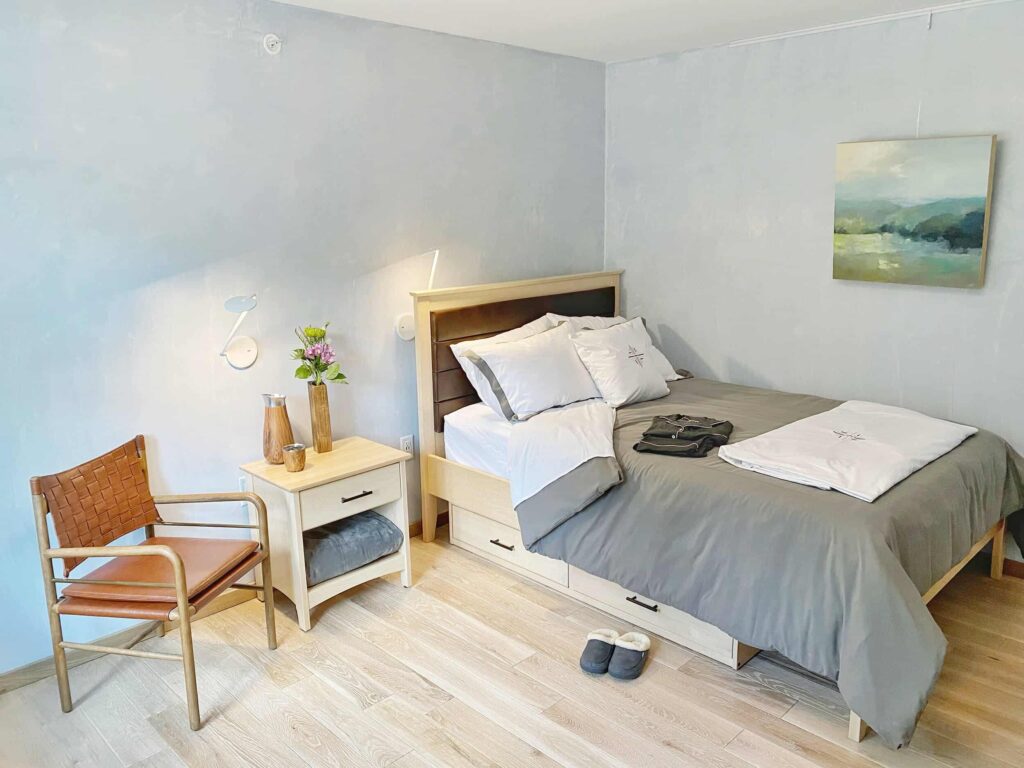
The provider’s facility tour describes a 4.25-acre property with a wellness studio, fitness equipment, an outdoor pool, a tennis court and access to outdoor activities. It also describes three meals a day, snacks and chef-led food preparation. These details help establish the daily environment without turning the Vermont setting into a claim about clinical effectiveness.
Season matters when comparing the stay with a summer photograph. Ask which outdoor areas will be usable during the intended dates and what the indoor alternatives look like. Food preferences, allergies and any assistance needed to move around the property should be discussed before admission. The tour’s references to a private environment do not, by themselves, establish that every bedroom is single occupancy. Confirm the assigned room, bathroom arrangement and any room-related charge in the admission documents. That avoids confusing privacy of the campus with exclusive use of living or treatment space.
Medical, nursing and clinical leadership
Sana’s published staff roster identifies Jonathan Hastings, MD, as medical director and Nashua Malko, LICSW, as clinical director. It also identifies Pierrette Lumumba in medical operations and Dyamond Maskell in nursing leadership. These are provider-published roles; they help a family distinguish responsibility for medical care, therapy and everyday nursing support.
The roster also includes case-management and culinary roles, reflecting the practical work involved in a residential stay. For an individual admission, ask who will be the assigned therapist and principal medical contact, how family questions are routed with consent, and who coordinates the transition home. A leadership biography is not a guarantee that its subject personally conducts every appointment. Clarifying the assigned team is especially useful when a referring psychiatrist or therapist needs a named counterpart at Sana. Current staff availability, appointment frequency and responsibility for out-of-hours concerns should be confirmed for the proposed program.
What a structured day can include
The provider’s FAQ illustrates a day with medical rounds, meals, clinical groups, movement, recovery-skills work, individual activities and evening recovery meetings. It names AA, NA, SMART Recovery and Recovery Dharma among meeting options. This is a sample of the structure, not a guaranteed appointment schedule or evidence that every group is available every day.
The same guidance restricts phones and laptops during detox and describes later activities in relation to clinical clearance. Ask how necessary family contact will be handled and when device access can be reviewed. Sana also says it contacts clients within 24 hours after discharge and periodically afterward. That follow-up can be part of the transition, but it should be distinguished from a scheduled course of ongoing therapy. Before leaving, confirm the next appointments, the contact route for practical questions and which continuing services will be delivered by Sana or by another provider.
Insurance verification and the financial agreement
Sana’s payment page identifies several commercial insurance relationships and says it does not accept Medicare or Medicaid. Other commercial plans may be handled through out-of-network benefits. A familiar insurer name therefore provides a starting point for a benefits check, rather than confirmation that the person’s entire proposed stay is covered.
The provider describes a Financial Agreement completed before admission. Use that document to distinguish authorized treatment days, the client’s contribution and services that may fall outside coverage. Ask what happens financially if the clinical recommendation exceeds the insurer’s approved days, and how a change of level of care affects authorization. Sana also discusses direct payment, including support from a family or employer. Where someone else is paying, agree in advance how billing communication will be handled without assuming that financial involvement permits access to confidential clinical information. The final estimate should identify the actual program and dates being offered.
Working with existing clinicians and planning the return
Sana’s information for referring professionals describes coordination with the client’s existing treatment network. With permission, this can include progress communication, joint sessions and information needed for the return to continuing care. The provider says it ordinarily works toward returning the person to the referring professional unless clinical needs or circumstances call for another arrangement.
This is useful when the residential stay is one part of an established treatment relationship. Before admission, identify who should receive information and what consent is required. During discharge planning, agree on the first appointment after leaving, any medication handover and the practical support available at home. A referral back is more useful when it includes a confirmed receiving clinician and a clear summary of the work completed. Families can ask how they may contribute with the resident’s permission while keeping the person’s own goals central. Changes in location or level of care should be reflected in the plan before departure.
Additional program details were checked against Sana at Stowe’s official pages on October 19, 2026. Published stay lengths differ between pages; individual admission, services, coverage and duration require confirmation.
Sources
Sources checked October 17, 2026.
Questions for your first conversation
Which clinical question would the initial assessment answer? Who would lead the plan and how would progress be reviewed? Which services take place at the residence and which involve an external provider? What are the limits of the proposed program, and when would another level of care be recommended? Ask the provider to connect its answers to the person’s history and the actual receiving team. Keep a dated record of the response with the written proposal so that later changes can be discussed clearly.
Inside the evidence index
The index records which information was located in sampled provider pages. Each of the twenty signals earns five points when located. A missing signal means it was not found in that sample. It does not establish that a service is absent. This is a documentation index, and it cannot establish clinical quality, licensing status, or outcomes.
Located: Published clinical roles · Provider source
Located: Professional qualifications described · Provider source
Located: Assessment process described · Provider source
Located: Individual planning described · Provider source
Located: Named psychological therapies · Provider source
Not located: Individual therapy described
Located: Medical care described · Provider source
Located: Admission or treatment boundaries described · Provider source
Located: Mental health scope described · Provider source
Located: Addiction or co-occurring scope described · Provider source
Located: Aftercare described · Provider source
Located: Family or transition support described · Provider source
Not located: Private accommodation described
Located: Confidentiality described · Provider source
Located: Location or admissions contact available · Provider source
Located: Programme duration described · Provider source
Located: Numerical treatment fee published · Provider source
Located: Inclusions or payment terms described · Provider source
Located: Team information published · Provider source
Located: Registration or accreditation information published · Provider source
Continue your comparison
United States rankings Addiction rankings Alcohol Addiction rankings Anxiety rankings Cocaine Addiction rankings Depression rankings Drug Addiction rankings Dual Diagnosis rankings Mental Health rankings Opioid Addiction rankings Prescription Medication rankings Trauma & PTSD rankings