How to read this profile
Arista Recovery is included in this edition for readers comparing private addiction and mental health care. Its program model is described as Arista Recovery’s Paola campus is an adult inpatient drug and alcohol treatment facility at 901 East Miami Street in Paola, Kansas. It treats substance use and co-occurring mental health needs. The location and clinical scope should be considered together: a provider can have assessment, residential and continuation services with different arrangements. The practical question is whether the specific program proposed for the person matches their assessed needs, preferences and available support.
The public-information review located material across 3 provider pages. The most fully documented areas in this sample were assessment, condition clarity, continuity of care, practical information, accountability. Topics to clarify directly include clinical team, therapies, medical pathways, privacy and setting, cost transparency. The score records documentation coverage and does not establish treatment effectiveness, safety or a guaranteed outcome. A topic that was not located may be explained by the provider in material outside this sample.
Before making an admission decision
Request the name of the receiving service, the proposed residence or hospital, and the professionals responsible for assessment and treatment. Ask for an illustrative weekly schedule that distinguishes individual clinical work from group sessions, complementary activities and practical support. Discuss the care available outside scheduled sessions and the arrangements for medical assessment or escalation. Where another hospital or independent clinician is involved, confirm that relationship and its cost rather than assuming it forms part of the residential package.
A financial comparison should use the same time period and accommodation model. The fee panel presents available public information as context; a current written proposal should identify the initial duration, the agreed team, inclusions, exclusions and payment terms. Confirm whether a private residence is reserved for one client or whether only the bedroom is private. Ask separately about companions, external appointments, transport and any extension of the stay. These details affect the practical experience and the full commitment.
Discuss the plan for returning home at the beginning of the conversation. Identify the clinician or coordinator responsible for the transition, the follow-up included in the fee and any services that require a separate arrangement. With consent, involve the professionals who already know the person. Remote or international follow-up depends on professional permissions and availability in the country where care is received. A directory profile is a starting point for that coordinated conversation, and provider details should be confirmed before travel or payment.
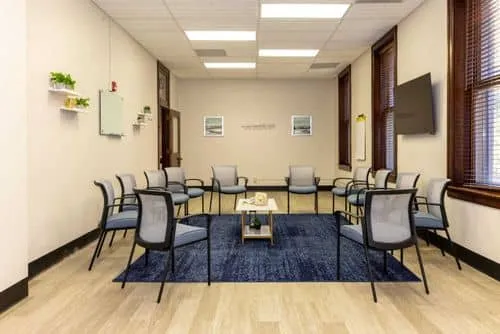
Arista Recovery’s Paola campus is an adult inpatient drug and alcohol treatment facility at 901 East Miami Street in Paola, Kansas. It treats substance use and co-occurring mental health needs.
The Paola campus offers medically supervised detoxification and residential inpatient treatment. Arista commonly describes residential care as 30–90 days, while the actual length and level of care are based on assessment. PHP, IOP and outpatient services are delivered at other Arista locations and should not be assigned to this campus.
Arista publishes (877) 279-0095 for admissions. The provider verifies benefits before treatment; coverage, authorization and out-of-pocket cost depend on the plan and clinical level of care. Discharge planning may include outpatient step-down care, alumni support, family involvement and community resources.
What the Paola campus actually provides
The current Paola location page identifies adult medical detox and residential addiction treatment at 901 East Miami Street. Its campus number is 913-914-9008, while the wider admissions number is 877-279-0095. The location is intended for people who need a live-in setting; it should not be confused with Arista’s separately located outpatient services.
The campus describes assessment of substance use, withdrawal risk, medical and mental health needs, medication, previous treatment and the home environment. That assessment determines whether Paola is appropriate and whether stabilization is needed first. The page also lists fitness, gardening and recreation among its amenities. These may affect everyday comfort, but their availability and place in the treatment plan should be confirmed.
A useful admission conversation ends with a named campus and proposed level of care. A general network referral, promise to check insurance or discussion of a therapy option does not by itself establish admission to this particular residential facility.
Residential addiction care and its daily structure
Arista’s inpatient addiction description uses inpatient rehab to mean live-in residential treatment. It describes individual and group therapy, education, recovery skills, family involvement where appropriate, and planning for the period after discharge. A structured residence is different from an emergency department or an acute medical hospital.
Ask for the Paola schedule rather than assuming every network service appears each day. The balance of clinical appointments, groups, meals, rest and activities can change as someone moves from initial stabilization into active therapy. Time spent on campus is not the same as time in individual treatment.
The provider emphasizes reviewing the reasons substance use has continued, including practical stresses and the recovery environment. It is therefore worth identifying the situations the patient will return to after a stay. The treatment plan should explain how those concerns will be addressed and how progress will influence the next level of care, rather than treating a quoted number of days as the only goal.
Detox decisions are individualized
The medical detox program describes assessment, withdrawal monitoring, medical or nursing support, and medication when appropriate. Arista says the required setting and duration depend on the substances involved, health history, previous withdrawal, current prescriptions and symptoms. Not everyone entering addiction treatment requires detox.
For Paola, clarify who evaluates withdrawal risk, what monitoring is available overnight, and how the team responds when a person needs hospital-level treatment. A previous detox experience or a general three-to-seven-day estimate does not establish the safest plan for a new admission. Severe withdrawal, suspected overdose or another immediate medical emergency requires urgent medical help rather than waiting for a scheduled intake.
Detox planning should also identify the treatment that follows stabilization. Ask whether the residential place is part of the same admission, whether a separate authorization is required, and how existing medication will be reviewed. Do not stop or change prescribed treatment to meet an assumed admission requirement.
Co-occurring mental health needs at an addiction campus
Arista’s dual-diagnosis information describes coordinated treatment when substance use and a mental health condition occur together. Its assessment can consider symptoms, medical needs, previous treatment, family history and the person’s environment. Psychological treatment, psychiatric support and medication management may be included according to the plan.
For a prospective Paola patient, the important question is how the specific mental health concern will be addressed alongside addiction treatment. Ask which clinician will review an existing diagnosis, how medication is coordinated, and whether the campus can safely manage the current severity of symptoms. A list of conditions on a network website is not proof of specialist capacity for every presentation.
Bring relevant records from previous clinicians when available, including what helped and what did not. Discuss changes in mood, sleep or thinking that occurred before substance use as well as during it. This gives the team a more useful clinical history than relying on a general label alone.
Standalone inpatient mental health care is identified with Ohio
The current inpatient mental health page expressly identifies that service with Arista’s Hilliard, Ohio location. It says Kansas locations may provide addiction care, co-occurring support, consultation or outpatient services, but a standalone inpatient mental health recommendation must be matched to confirmed availability.
This distinction matters for someone seeking residential care primarily for depression, anxiety or another psychiatric condition without a substance use treatment need. Do not assume that a mental health program advertised by the network is delivered at Paola. Request the proposed facility name, age eligibility, clinical scope and responsible team before arranging travel.
The mental health page also distinguishes planned residential admission from emergency services. Immediate danger or a medical or psychiatric emergency needs urgent assessment. A comfortable live-in program cannot be presumed to provide the same emergency resources as a hospital. If Paola is not the appropriate setting, ask for a clear explanation of the recommended alternative rather than a general assurance about network-wide services.
Family involvement depends on consent and the care plan
The Family Program describes education, communication, boundaries, relapse-prevention discussion and preparation for discharge. Arista states that participation varies with location, level of care, clinical need, safety and the patient’s consent.
That means relatives should establish what Paola currently offers: individual family appointments, education groups, remote participation or scheduled planning calls. These are different services and may have different times and costs. Living far away does not establish automatic access to video sessions, so arrange the practical details early.
The provider frames family work as support rather than a way to control another adult’s recovery. Ask what information can be shared, who the agreed contact person is, and how loved ones can raise concerns without expecting unrestricted access to clinical records. Families may also need their own support. A workable discharge discussion should address what help is realistic at home, which boundaries need to be clear, and which responsibilities belong to the treating professionals.
Medication support and continuity after discharge
Arista’s medication-assisted treatment information describes medication as a possible part of care for certain substance use disorders, particularly opioid and alcohol use disorders. It explicitly states that availability depends on location, the medication, clinician capacity and individual clinical assessment. Some care may require coordination with an outside prescriber.
The page’s discussion of medication options does not establish that every named medicine is dispensed at Paola. A person already receiving prescribed treatment should ask whether it can continue, who will review it, and what records are needed. Any change should be directed by the appropriate medical professional rather than by assumptions about a residential program’s philosophy.
Continuity is equally important at discharge. Ask who will prescribe after leaving, when the next appointment occurs, and how to avoid an unintended interruption. The plan should include practical access and communication between providers, not simply a recommendation to find someone after returning home.
How Overland Park fits into step-down planning
Arista’s Overland Park center is at 9401 Reeds Road, Suite 101. It describes adult partial hospitalization, intensive outpatient treatment, standard outpatient care and aftercare. The location expressly distinguishes those services from medical detox and residential treatment.
This can be a relevant next step after Paola when it is clinically suitable and geographically workable. It is not an automatic transfer or evidence that Paola provides the same outpatient timetable. Ask whether the patient can attend from their own home, what the assigned schedule involves, and whether transportation and work commitments are compatible with attendance.
For someone returning outside the area, discharge planning may need a different provider. Obtain appointment details and any required records or referrals before leaving residential care. If a person cannot remain safe between sessions, the team should reassess the level of care rather than assume outpatient treatment is appropriate merely because a residential stay has ended.
Sober living is a housing decision as well as a recovery decision
Arista’s sober-living page describes a substance-free residence with structure and accountability. It distinguishes recovery housing from detox, residential treatment and therapy. Arista can discuss whether housing belongs in an aftercare plan, but the description does not identify every available residence as an Arista-operated facility.
Ask for the address and operator of any proposed home, along with rent, deposits, rules, staffing and the connection to ongoing treatment. Medication policies, transport to appointments and the response to renewed substance use deserve direct answers. Housing and clinical care may involve different organizations and payment arrangements.
The decision should reflect the person’s needs and preferences, including whether returning to their previous home is workable. A sober residence may help someone practice daily routines while attending treatment elsewhere, but it does not substitute for medical supervision when that is needed. Confirm the actual place and support available instead of relying on the generic term “sober living.”
Equine work is a conditional complementary option
The equine therapy page describes guided interaction with horses, such as observing, grooming or leading, with reflection on communication and recovery goals. Arista identifies Paola as a possible setting for experiential work, while explicitly making availability dependent on staffing, weather, safety, location and the treatment plan.
This is not a guarantee of horse riding or a fixed number of sessions during every stay. Ask whether equine work is currently offered, who facilitates it, how it connects to clinical goals, and what alternatives are available for someone with allergies, a physical limitation or discomfort around animals.
Arista itself presents the approach as complementary. It should not replace needed detox, psychotherapy or psychiatric care, and the page does not establish a guaranteed outcome. The useful comparison is how an activity is integrated with the patient’s wider plan, rather than whether it adds another amenity to a list.
Preparing for the admission conversation
The admissions process begins with a pre-assessment, followed by benefit verification and arrangements for intake. The coordinator asks about addiction history, previous treatment, current symptoms, living circumstances and support. Arista says it provides a packing list and may coordinate transportation when necessary.
Have current medication details, relevant clinical records and insurance information available. Explain any mobility, dietary, communication or other practical needs before travel so the campus can say what it can accommodate. If transportation is proposed, confirm its operator, timing and any charge; coordination does not necessarily mean free transport.
Ask when a clinical decision is expected and what information remains outstanding. A same-day admission description is not a guarantee that a suitable bed, authorization and safe placement are immediately available. The aim is to arrive with a confirmed setting and plan, rather than with important eligibility or medication questions still unresolved.
What an insurance check can and cannot tell you
Arista’s insurance verification service offers to contact the insurer and review benefits without charging for the check. It also directs people without applicable coverage to discuss self-pay options. The page does not provide a universal Paola cash price.
Request a written estimate for the recommended level of care. It should distinguish the projected treatment cost from the amount the insurer may authorize and the amount the patient may owe. Ask about deductibles, coinsurance, uncovered services and any separate charges for medication or transportation.
Also establish how financial information will be updated if the clinical plan changes. Authorization for detox does not automatically establish coverage for a later residential stay, outpatient program or recovery residence. A benefits conversation is most useful when tied to the named campus, proposed services and expected review points.
Sources
- Arista Recovery Paola campus
- Arista alcohol treatment and locations
- Arista Paola program and aftercare overview
Sources checked October 17, 2026.
Questions for your first conversation
Which clinical question would the initial assessment answer? Who would lead the plan and how would progress be reviewed? Which services take place at the residence and which involve an external provider? What are the limits of the proposed program, and when would another level of care be recommended? Ask the provider to connect its answers to the person’s history and the actual receiving team. Keep a dated record of the response with the written proposal so that later changes can be discussed clearly.
Inside the evidence index
The index records which information was located in sampled provider pages. Each of the twenty signals earns five points when located. A missing signal means it was not found in that sample. It does not establish that a service is absent. This is a documentation index, and it cannot establish clinical quality, licensing status, or outcomes.
Not located: Published clinical roles
Not located: Professional qualifications described
Located: Assessment process described · Provider source
Located: Individual planning described · Provider source
Located: Named psychological therapies · Provider source
Not located: Individual therapy described
Not located: Medical care described
Located: Admission or treatment boundaries described · Provider source
Located: Mental health scope described · Provider source
Located: Addiction or co-occurring scope described · Provider source
Located: Aftercare described · Provider source
Located: Family or transition support described · Provider source
Not located: Private accommodation described
Located: Confidentiality described · Provider source
Located: Location or admissions contact available · Provider source
Located: Programme duration described · Provider source
Not located: Numerical treatment fee published
Located: Inclusions or payment terms described · Provider source
Located: Team information published · Provider source
Located: Registration or accreditation information published · Provider source
Continue your comparison
United States rankings Addiction rankings Alcohol Addiction rankings Cocaine Addiction rankings Drug Addiction rankings Dual Diagnosis rankings Mental Health rankings Opioid Addiction rankings Prescription Medication rankings